TERRA FIRMA
In collaboration with Zoey Botnick and Hunter Perez
Terra Firma sits on the west bank of the Gowanus Canal, in a Brooklyn
neighborhood remade by the 2021 rezoning. Organized by a federal
Superfund waterway, at 152 3rd St, this 18-story, hybrid mass timber
and concrete podium tower is situated at a critical nexus of the canal.
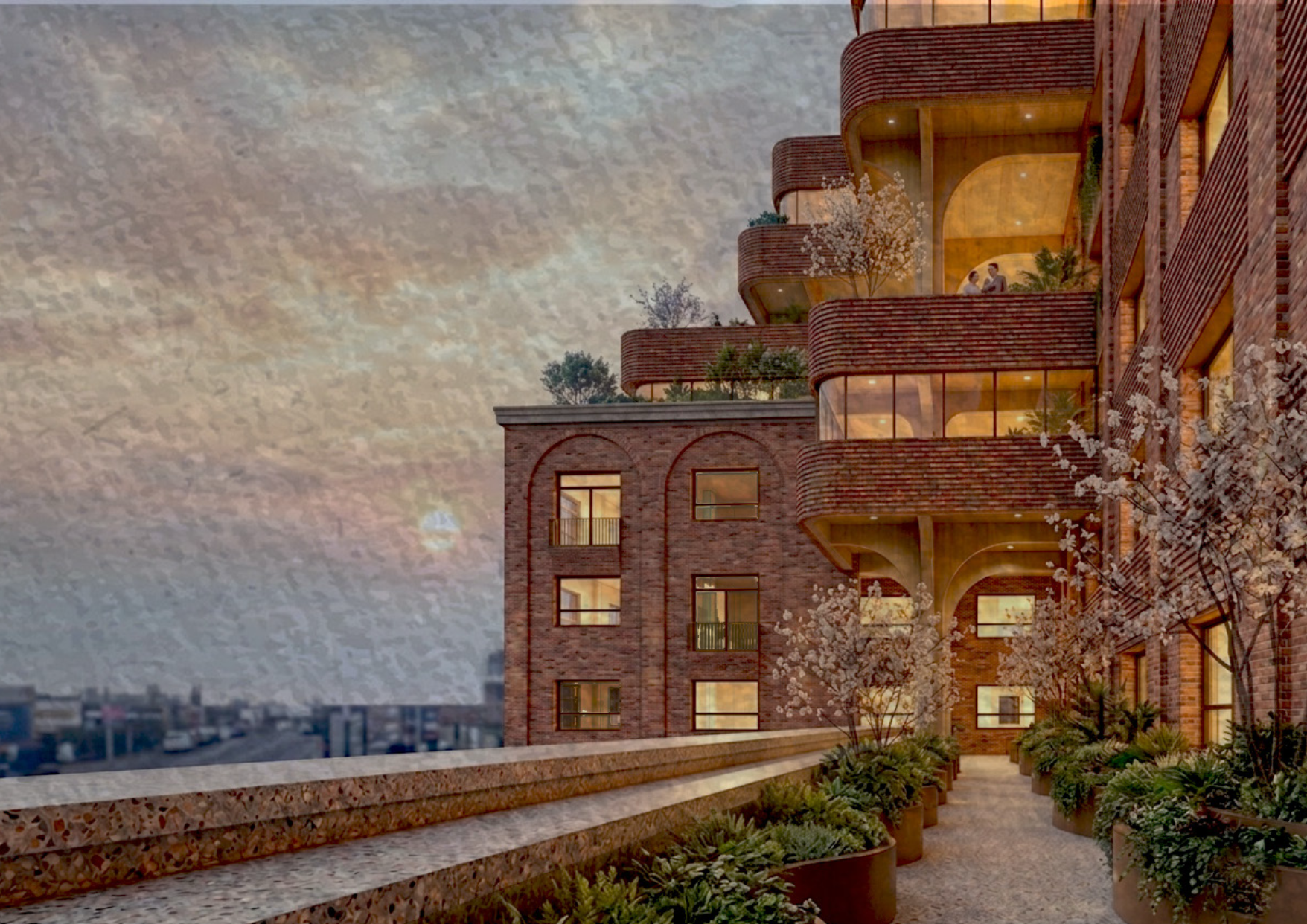
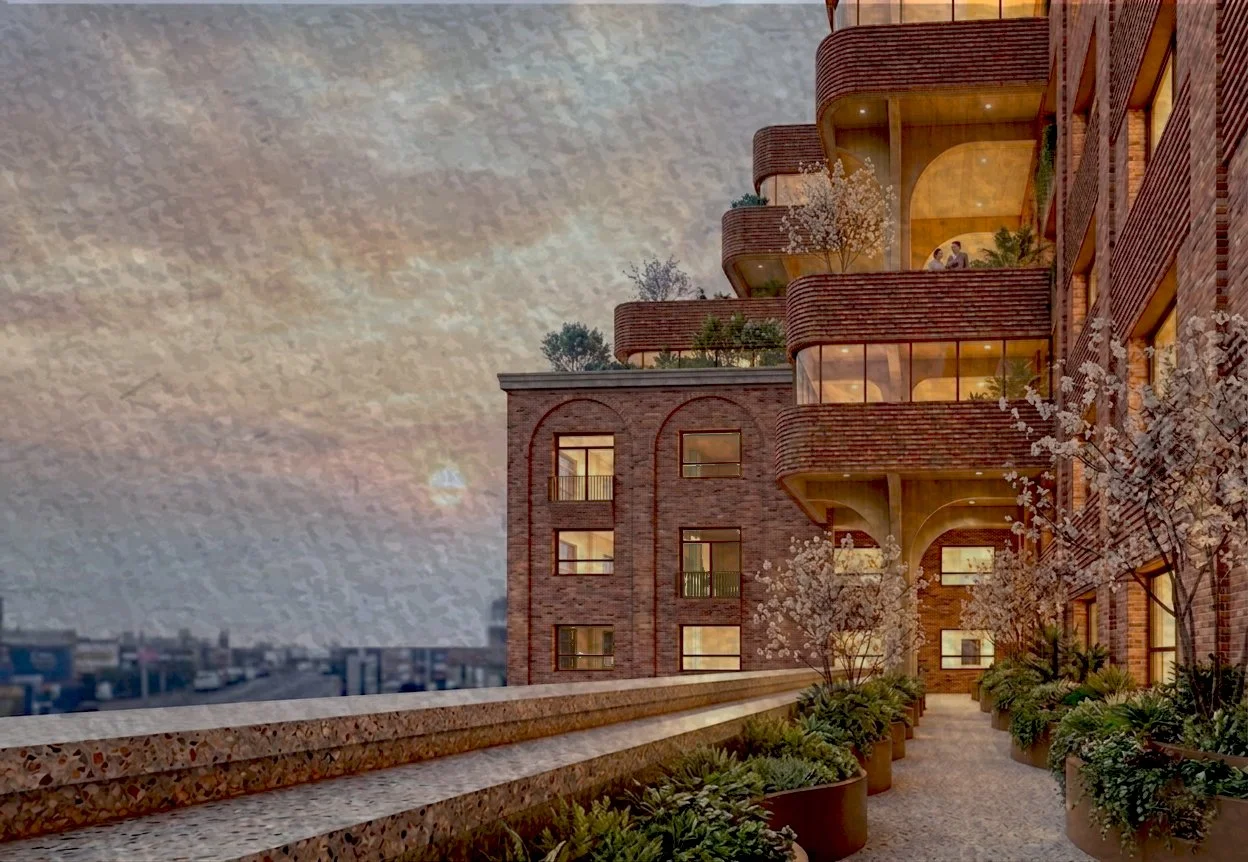
Planted terraces, a permeable phytoremediation esplanade, and storm/
wastewater retention strategy all work to slow, hold, and clean water
the city now dumps into the channel during storms. Engineered green
infrastructure as permanent home, these goals are mutually reinforcing.
SITE RESEARCH
STRENGTHEN: The site carries the legacy of a century of heavy
industry. To achieve the city’s vision of ‘Little Copenhagen, ’ Terra
Firma’s ground plane is a remediation device. The building’s foundation
serves as brownfield cleanup with a 24,700 SF planted and porous canal
edge public esplanade. A replicable framework for waterfront
restoration, Terra Firma supports its residents and local ecology.
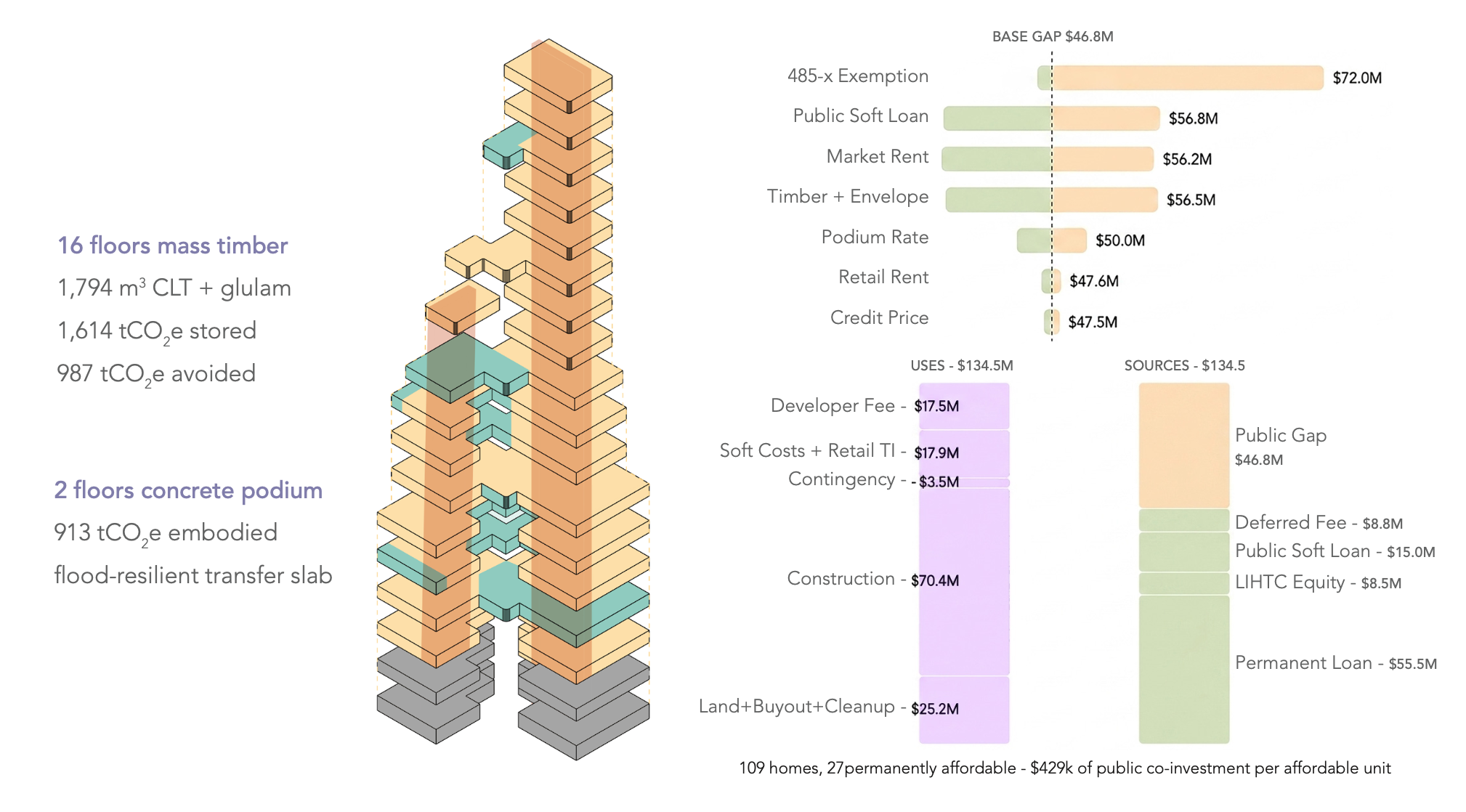
SEQUESTER: Cross-laminated timber slabs with glulam columns and
beams transform the building into a carbon sink. Like a forest canopy
that pulls carbon from the air, Terra Firma fills an existing canopy gap in
West Brooklyn. The structure acts as canopy infill infrastructure,
entrenching the sequestering work of an urban forest on the Canal.
Timber elements store 2,601 tonnes of biogenic CO2e and avoids 987
tonnes against a concrete baseline. This is the same as removing 565
cars from the road for a year.
STABILIZE: Rezoning brings investment and displacement pressure. Terra Firma answers it with permanence: 25% of homes are income-restricted at an average of 80%
AMI and, under New York’s 485-x program, stay affordable forever rather than for a 30-year term that later expires. Financed as rental rather than for-sale, the building
uses the public subsidy stack (a 485-x tax exemption, Low-Income Housing Tax Credit equity, and city soft capital) as a counterweight to the 2021 rezoning.